Tag Archives: VOIP

The Primary Reasons to Choose VoIP Services for Your Business

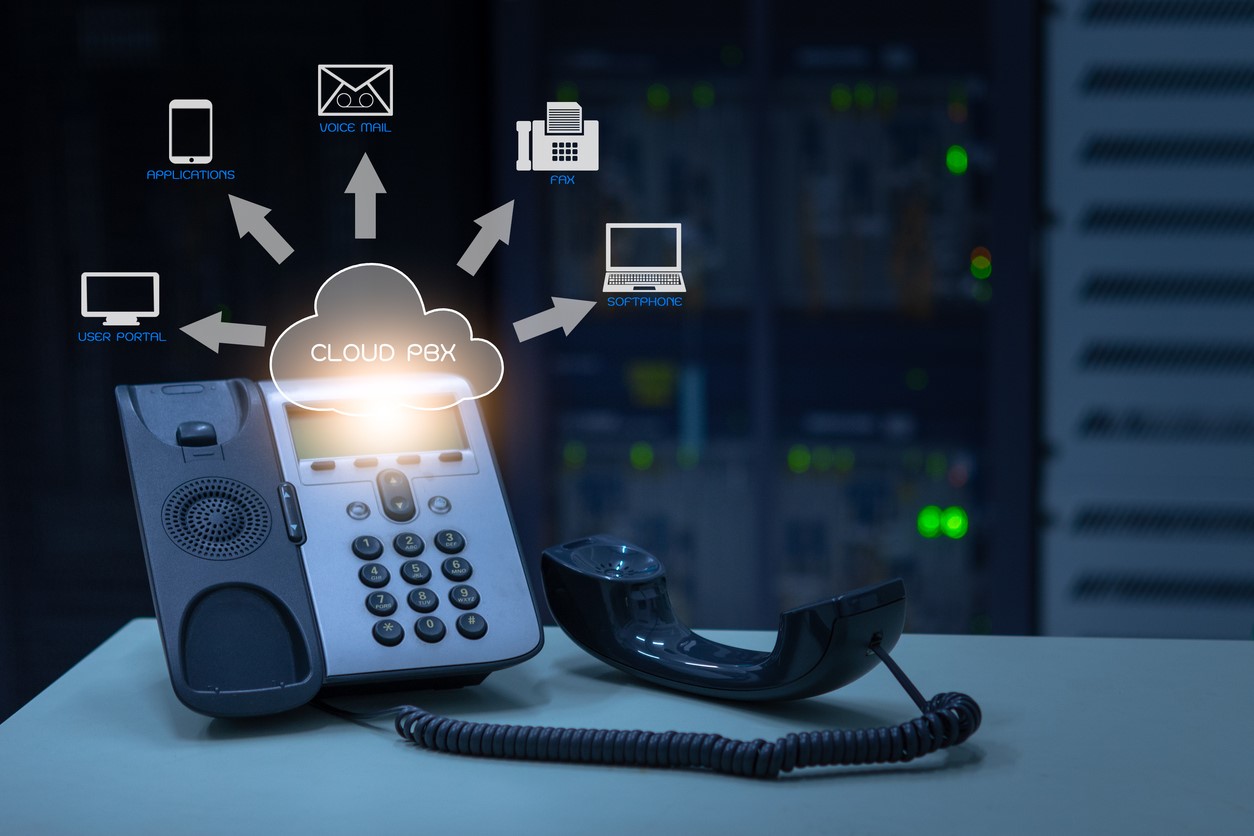
IP Telephony cloud pbx concept, telephone device with illustration icon of voip services

Is it time for an upgrade of your phone system?

Voice over Internet Protocol (or VoIP as it is more commonly known) is a telephony system that allows users to make and receive calls using a broadband internet connection rather than a conventional analog phone system. VoIP works by recording audio and converting it into a digital signal that can be transmitted over an internet connection. Recent years have seen a vast expansion of VoIP both amongst residential and commercial users, as VoIP phone systems tend to provide a higher level of service than traditional phone systems at a much lower cost. However, if your business still uses a traditional phone system, you may be unaware of the benefits VoIP can provide, and you may be wondering why there is so much talk about VoIP. If your company still utilizes an analog phone system, here are just a few of the reasons you should consider switching to VoIP.

VoIP Can Save You Money

One of the primary reasons that so many businesses are switching to VoIP phone systems is due to the substantial financial savings that doing so can represent. The fact is that traditional phone systems are expensive to set up, alter, and maintain. Not only are most set up and maintenance costs averted with VoIP, but also, placing calls is much more affordable using a VoIP system. Many VoIP phone systems include unlimited domestic calling for free, and many even include all of North America. When international calls are placed, it is at a much more affordable rate than offered by the mainstream phone companies, which can mean significant savings if you do a lot of international business. The great thing about VoIP is that you do not have to sacrifice call quality for these cost savings. VoIP systems provide clear sound quality that rivals traditional phone lines in most instances, depending on your internet connection.

VoIP is Easy to Install and Maintain

One of the greatest hassles of traditional phone systems is that they are difficult, costly, and time-consuming to set up as someone has to come and run wiring throughout your facility and set up the necessary hardware. Alternatively, setting up a VoIP phone system is often as easy as connecting them to your computer or internet connection, making it easy for you to set these systems up yourself. No hardware or software needs to be installed before you can start using your IP phone system.

It Scales Up and Down Easily

Another problem with traditional phone systems is that they can be difficult and costly to scale up and down. The fact is that it is not always easy to predict how many phone lines you will need to add in the coming year, or where you will need these lines in your facility. This can lead to costly changes if you need to add or move a line. With a VoIP phone system, adding a new line can be done instantly, wherever you need it, as soon as you bring on a new employee, and the phone line can just as easily be removed if they leave. Additionally, moving a phone line with VoIP is as simple as placing it where you need it to go, without the need for any rewiring.

VoIP Supports a Variety of Features

Another benefit of VoIP phone systems is they often come standard with a variety of features that are either extra, or not available, in a traditional phone system. Features that are included or available on many VoIP phone systems include: call holding, call transfers, caller ID, voicemail, visual voicemail, and conference calling. VoIP phone systems also allow for video conferencing, allowing you to conduct business meetings remotely, which can reduce travel expenses.

VoIP phone systems are truly transforming the way in which companies conduct business by providing a variety of useful benefits, only a few of which we have been able to highlight here. Contact us to learn more about VoIP and the reasons why you should consider converting your business to a VoIP phone system.


Remote Work and The Technology That’s Made it Possible: Everything You Need to Know About Telecommuting

Man woking remotely from home, web conferencing with VoIP systems

Flexibility to work from home is key for a lot of people

Recent years have seen a drastic increase in the popularity of telecommuting (employees working remotely from home). In fact, from 2007 to 2017, the number of Americans working remotely increased by 115% with 43% of Americans reporting they worked remotely at least part of the time by 2017. While telecommuting continues to grow across most sectors, it has become particularly popular amongst businesses in the tech industry as well as among those in finance and media (telecommuting is least common in education and retail).


The Primary Reasons Telecommuting is on The Rise

Seeing the statistics above, you may be wondering why telecommuting is on the rise. Wouldn’t having employees together reduce hassle and increase productivity? However, studies have shown this assumption to be false. Here are just a few of the benefits telecommuting can provide.

  • Telecommuting Increases Productivity
      • Offices Can Be a Distraction: While many would think it would be to everyone’s benefit to have all employees in the office, the fact is that modern offices have become very distracting places full of unnecessary meetings and constant distractions from fellow employees. In fact, a recent study found that employees who worked from home performed 13.5% more efficiently than when they were in the office due to reduced distraction.
      • Commuting Reduces Productivity: Not only does being in the office reduce productivity, but so does the act of commuting to the office. Studies have found that long commutes have a drastic impact on employee health by increasing rates of obesity, heart disease, and depression, which resulted in absences and poor work performance. Telecommuting can then make employees happier and healthier while simultaneously increasing their productivity.
  • Telecommuting Saves Businesses Money: Perhaps the greatest way businesses can benefit from a remote workforce is in the money they will save on business expenses by having employees telecommute. Every employee who works from home limits the amount of money a company will have to spend on office space, furniture, technology, supplies, and utilities, which can represent substantial savings. In fact, it is estimated that each year companies save upwards of 100 million dollars on their office leases by using remote employees.

Increased productivity, a happier workforce, and substantial savings on business expenses are just a few of the many reasons why telecommuting continues to rise in popularity amongst businesses. However, part of the reason why there has been a rise in telecommuting in recent years has been due to the advent of technology that has made remote work possible.

The Technology Needed for Telecommuting

The current rise in telecommuting has been made possible by current technologies that allow for remote collaboration. While telecommuting can prove beneficial for many businesses, there are a few technologies that businesses must first invest in to make this possible such as:

  • Cloud Computing and Electronic Document Management Software: An essential tool for developing a remote workforce is cloud computing and electronic document management systems. For companies looking to develop a remote workforce, electronic document management is key as this will allow individuals to locate files and retrieve information digitally rather than needing to physically locate these files from a drawer somewhere. Cloud computing software then allows individuals to access these files, as well as software and applications, remotely and securely through the cloud from wherever they are working.
  • Web Conferencing and VoIP Systems: Another critical piece of technology companies developing a remote workforce need is a modern VoIP phone system. These phone systems utilize the internet rather than a traditional phone line to send and receive calls, which allows individuals to use their phone service wherever they are as long as they have an internet connection. This allows employees to use their work phone line to communicate with colleagues, business partners, and customers from the comfort of their own home. Modern unified communications systems can be particularly beneficial for a remote workforce as these systems also often include features such as web chat and video conferencing, which can be vital in allowing remote employees to collaborate together from anywhere in the world.

Telecommuting continues to grow in popularity not only because of the benefits it can provide to businesses and employees alike but also due to the fact that technological advancements have made remote work easier and more convenient than ever before. Contact us to learn more about telecommuting and how it could benefit your business.

Can Your Customers and Leads Get in Touch with Your Salespeople?

Customer and/or lead getting in touch with salesperson over VOIP

How complicated is your business auto attendant?

Sales funnels are fragile things. When your company is in the process of converting a lead into a paying customer, a lot of events and interests have to line up just right. One of the most important factors people look for, whether you sell business to business products or you market to individual consumers, is a personal experience. Customers want to know that your company is available on their schedule. Communication needs to be prompt, professional, and easy, no matter what medium they’re using. If your salespeople handle a lot of calls, they need to have the right tools so their leads can reach out to them with questions and call them easily when they’re ready to make a purchase. Here’s how Voice over IP telephony services, or VOIP, can help:

Keep your extensions and company directory organized.

Before VoIP combined your telephony and administrative systems, keeping track of extensions was difficult. Every incident of employee turnover would have a few months of confusion as extensions get associated with a new phone owner. Voice messages required a complicated array of button pushing, and there was no centralized control over how to access specific employees.

But a VoIP system is easily edited. You can fill in the details of different employees, their extension, and their schedule. The information is added to and filled in through a computer program rather than through a patchwork of phones. Not only does this give easier control to a central authority, like someone in the human resources department, those profiles can also be visible to internal employees and, on a limited basis, on your company website. Everyone benefits when the contact details are easily changed and updated live.

Route calls between desk phones and cell phones based on your employees’ in-office schedules.

The line between in-office work and office work is changing. Whether you personally want a bright dividing line between work and personal hours, many salespeople are starting to migrate to a looser schedule. Lots of sales are made based on off-hours conversations and easy accessibility. Instead of the older method of giving valuable clients or leads two different phone numbers, your VoIP system can handle the schedule. Each employee can establish when phone calls should go to their office phone and when calls should go to their cell phones. They can also designate true off hours when calls should go straight to voicemail. Not only is that easy on prospective customers, but employees don’t have to tell anyone their cell phone number.

Make messages easier to customize and standardize.

Voicemail and automated messages can make or break a customer experience. Having basic, clunky messages that are made up of a template and added details sounds dated. They also sound bland and generic when you can’t add company-specific wording across every extension.

But VoIP message interfaces make it easier to upload sound bytes. Whether your company has a seasonal introduction message or promotional content that needs to be added to every telephone “signature,” VoIP makes it easier to manage. The system administrator can also distribute a sound file for mass upload and customization. This makes it easier to manage a standardized presentation style while still allowing for custom messages. Even better, you can run a report to see who hasn’t updated their recorded messages and make sure everyone’s on the same page.

VoIP systems don’t just help your customer service department. They’re an easy system that helps your salespeople reach out to new clients and ensures more callbacks. Even an online interface for telephone profiles makes everyone more accessible, gets rid of incorrect data, and improves your customers’ experience. Go to SystemsNet to see what that interface looks like.

VoIP Phone Systems Or Traditional PBX Phone Systems: Which Will You Choose?

Call center workers using a cloud-based phone system or VoIP Phone System

VOIP is the way to go for your business communications

Premise-based PBX phone systems are no longer the go-to option for businesses like yours. There are various reasons why failing to upgrade to a cloud-based phone system from an on-premise PBX phone system can significantly hinder your business.
Some of the disadvantages of using a PBX phone system include restrictions on customer service, increased downtime, and a limited amount of features.
Disadvantages Of PBX Phone Systems
The majority of consumers who are searching for products and services on a daily basis will prefer to communicate with a company that has a reliable and strong customer service. Does your current PBX phone system have the ability to answer some of your most important customer service questions?
How many times does one question need to be transferred?
How long does a customer have to wait on hold?
Do customers ever end the phone call because they were tired of waiting on hold or being constantly transferred?
If you are using a premise-based PBX phone system, you may not be able to find the answers to any of the above questions. You are likely not getting the type of features and resources you can get from a cloud-based phone system. When you use a cloud-based phone system, you will be able to use features like call recording, queue management, call reporting, etc.
Another disadvantage of an on-site PBX phone system is the high amount of downtime. When your PBX phone system fails, this means you will have to wait for your provider to arrive at your workplace to repair the problem. There is no guarantee that the provider will be able to repair the problem the same day. If your system is down, you will not be able to take phone calls or receive phone calls. No one wants to go through this as a business owner or manager, right?
When you use a VoIP phone system in your workplace, you will have a system that has been securely established. You will be able to use the same type of service that police officers, emergency responders, and other emergency services use. If a cloud-based phone system has been beneficial and reliable for them, we think this system can be the same for you.
If you have been looking for ways to cut some of your business’s unnecessary costs or if you have been looking for ways to improve conferencing and other communication methods, you may want to think about making the switch to a cloud-based phone system. Switching to a cloud-based phone system can become one of the best communication solutions your business has ever made.
We know you will not want to deal with complications, stress, and headaches in your workplace on a daily basis, right? We think you deserve to have a telecommunications system that will allow you to work easily and effectively.
When you have a cloud-based phone system, you will not have to be bothered with the constant technology talk and the blaming of who caused damage to the system. When you have a problem when you are using a cloud-based phone system, the only thing you will need to do is call the support number of your cloud-based phone system provider. After you make the phone call, a professional will handle any issue that you may have. You will not have to worry about downtime or unnecessary costs on repairs that could have been avoided.
On-site PBX phone systems were once the only option for businesses to use. Since this is no longer the case, don’t you think it is time for you to see how a cloud-based phone system can contribute to the current and future success of your business? Contact us today for a consultation.